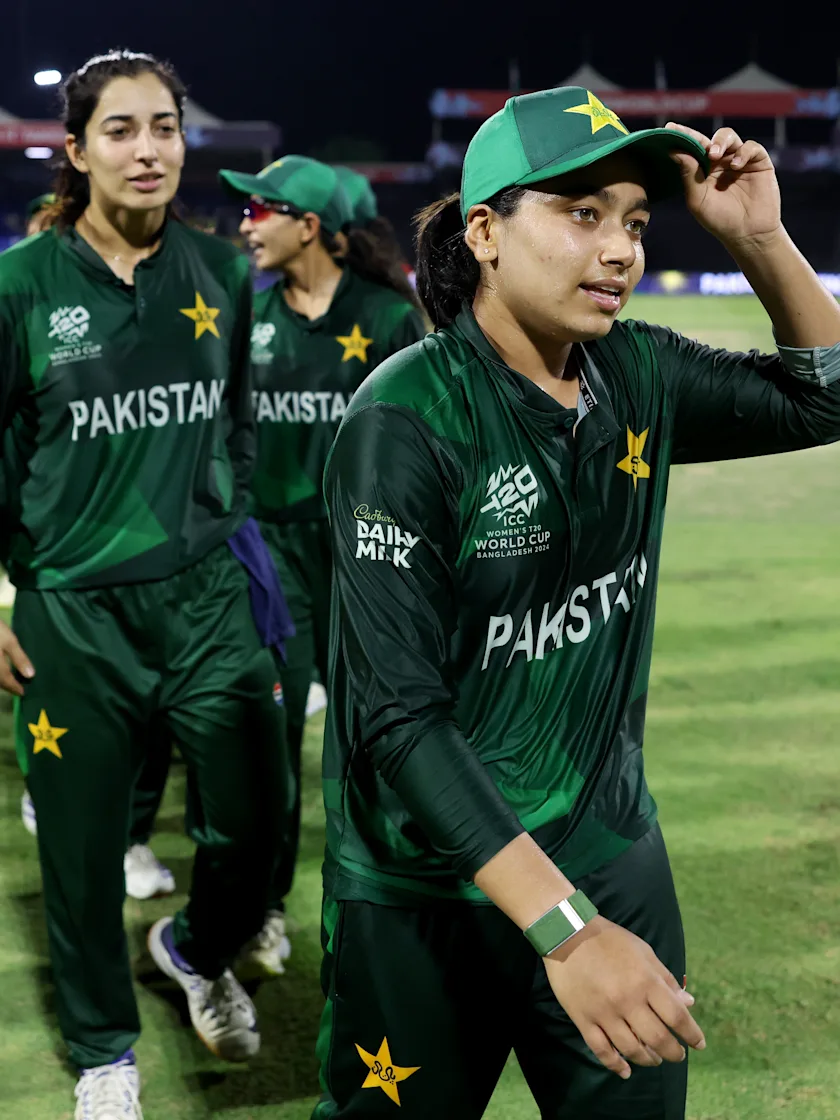
Pakistan women cricketers in green jerseys
Byon Sportswear

Custom sublimated cricket jerseys

Byon Textile creates custom cricket jerseys for clubs, T20 squads and academies, with breathable fabric options and room to bat, bowl and field. Choose your sleeves, collar and team colors, then add club crests, sponsor logos and player details.

  • T20 colors and traditional cricket whites
  • Breathable fabric and mesh panel options
  • Short and long sleeves for your squad
View jersey examples

Cricket jersey features

Designed for the demands of every innings

Bowling stretches the shoulders overhead. Batting rotates the torso. Fielding combines long periods outdoors with sudden sprints and throws. Build your cricket jersey around those movements with the following print, fabric and construction options, selected to suit your team's playing conditions.

Sublimation printing

Bring T20 colors, gradients and fades into the fabric alongside your club crest, sponsor logos and player numbers. Sublimated graphics add no raised print layer, keeping large back numbers and chest artwork smooth against the shirt.

Moisture-wicking fabric options

Choose a performance polyester designed to move moisture away from the skin during a bowling spell or a long innings. Match the fabric's weight, feel and finish to your climate and match format; moisture-management performance depends on the selected material.

Lightweight mesh ventilation

Use breathable mesh in selected side or underarm panels to introduce ventilation where the jersey meets the body. Balance the openness of the knit with coverage, especially for white shirts and pale team colors.

Freedom through the shoulders

A cricket fit needs room for a full bowling action, an overhead catch and the follow-through of a cover drive. Shape the armholes, sleeves and upper body around those movements, with stretch fabric options where a closer fit is required.

Cut-and-sew panels

Combine separate body, sleeve and side panels to control the fit, contrast colors and position of ventilation zones. Plan seam placement alongside the artwork so a chest sponsor or back number reads clearly across the finished jersey.

Cricket collars and sleeves

Pair a fold-over polo collar and placket with traditional club styling, or choose a simpler neckline for a T20 look. Short sleeves leave the forearms free; long sleeves provide additional coverage, with cuff and sleeve measurements that suit batting gloves.

Cricket jersey options

From T20 colors to traditional cricket whites

Choose the match style your club needs, then adapt the sleeves, collar and artwork across the squad. Images in this section are temporary sportswear references, not finished cricket jersey samples.

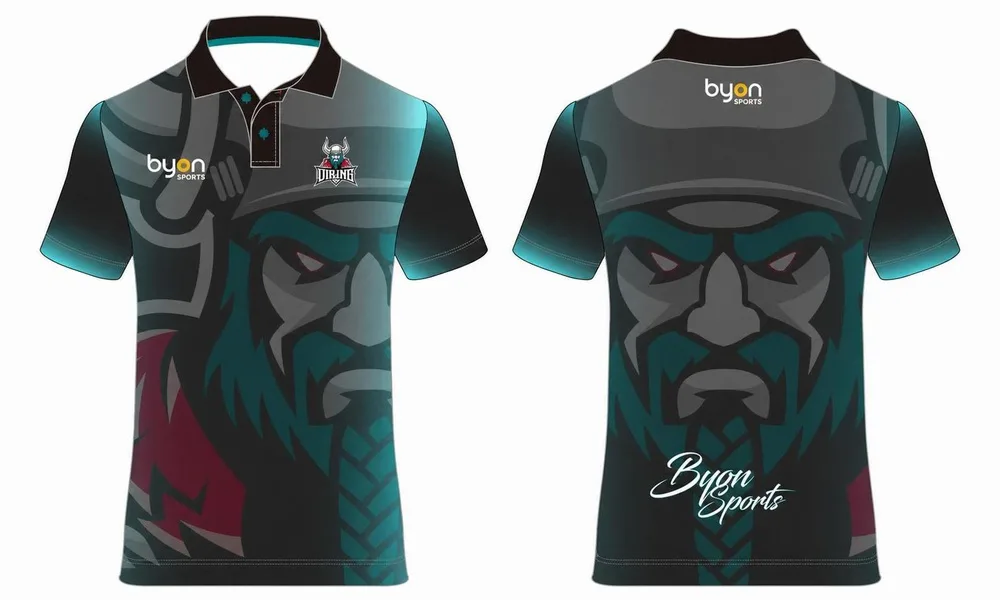
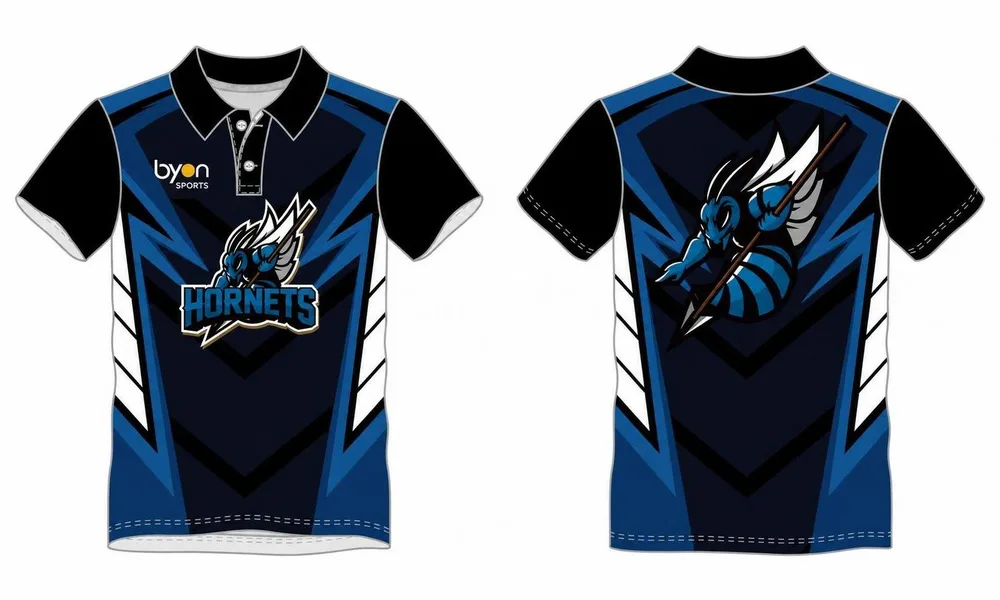
Blue and black Hornets polo, front and back

Short-sleeve T20 cricket jerseys

Bold team colors, full-color sublimation and a clear back number for limited-overs cricket. Leave space for the club crest, chest sponsor and sleeve sponsors. Temporary sports polo image.

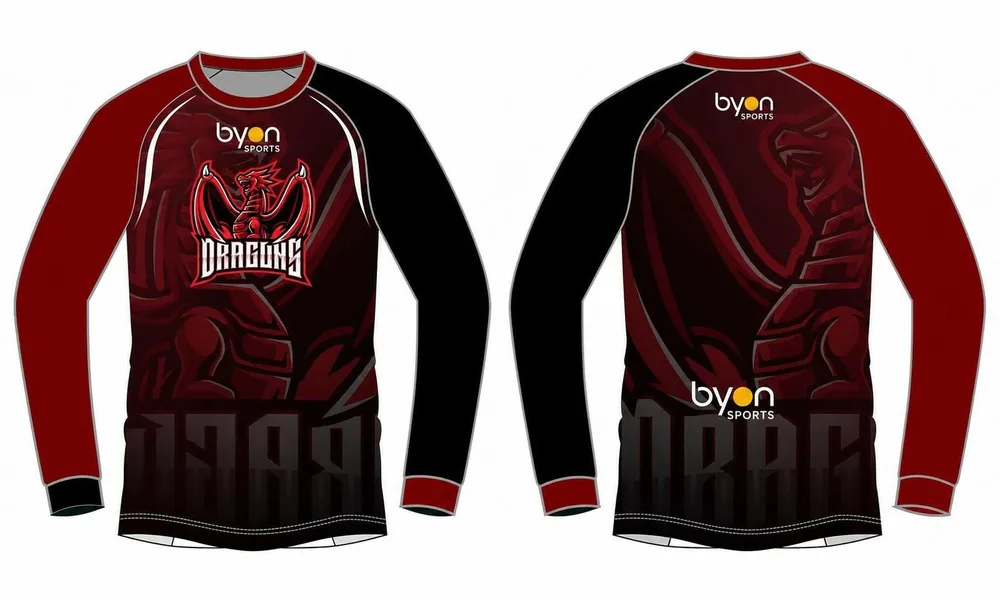
Red and black long-sleeve Dragons jersey

Long-sleeve cricket jerseys

Additional arm coverage for long days in the field or cooler match conditions. Keep the sleeve roomy through the bowling action and the cuff comfortable beside batting gloves. Temporary esports jersey image.

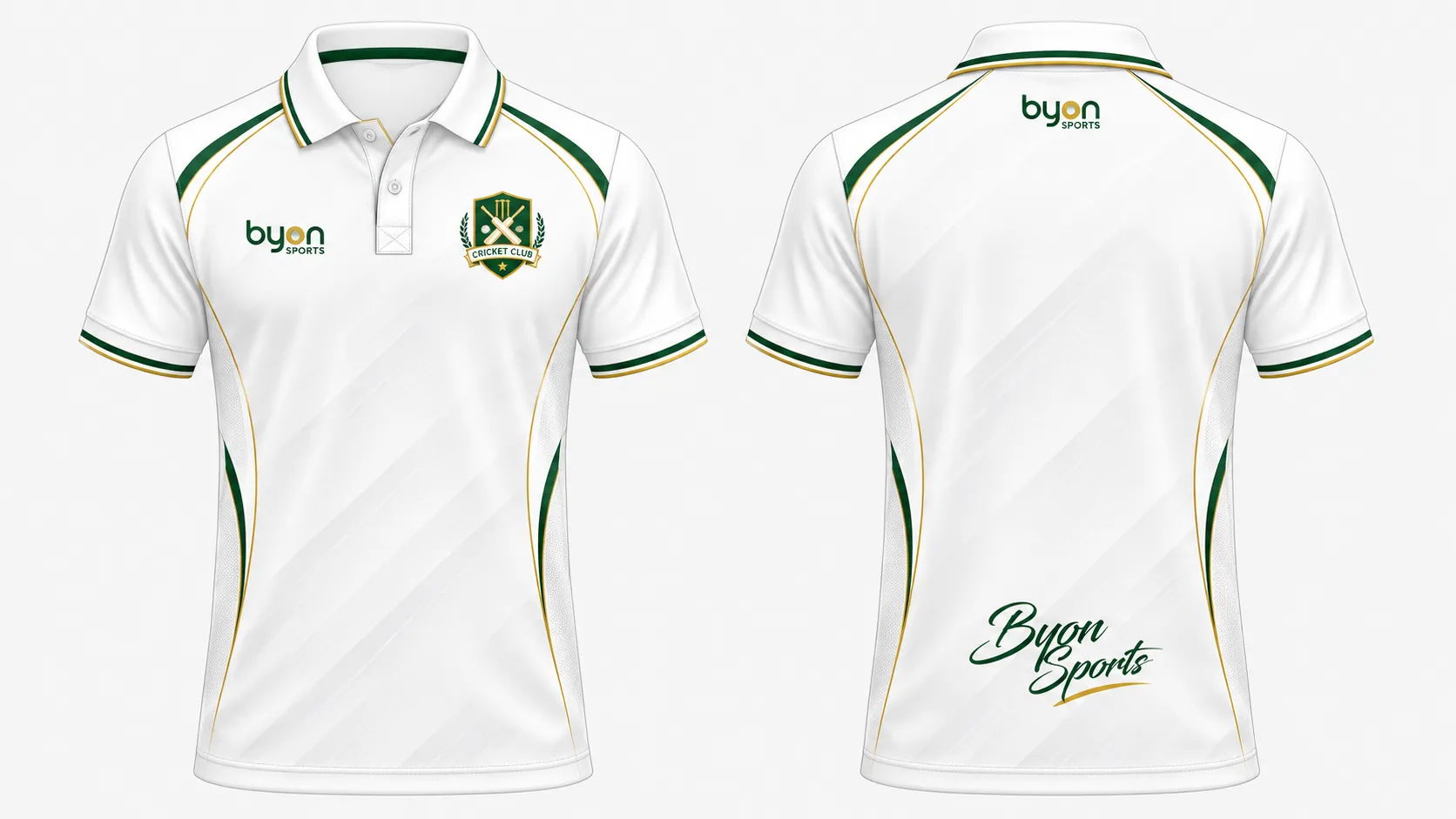
White cricket polo with green and gold trim

Traditional white cricket shirts

A white or cream base, polo collar and restrained club detailing for competitions played in whites. Choose the fabric with coverage in mind and check permitted trim and logo colors. Colored polo shown as a temporary shape reference.

Black junior polo with burgundy side panels

Junior cricket jerseys

Carry the senior team's identity into academy and junior sizes, with crest, sponsor and number layouts scaled to smaller shirts. Check reach and body length for developing batters and bowlers. Temporary youth sports polo image.

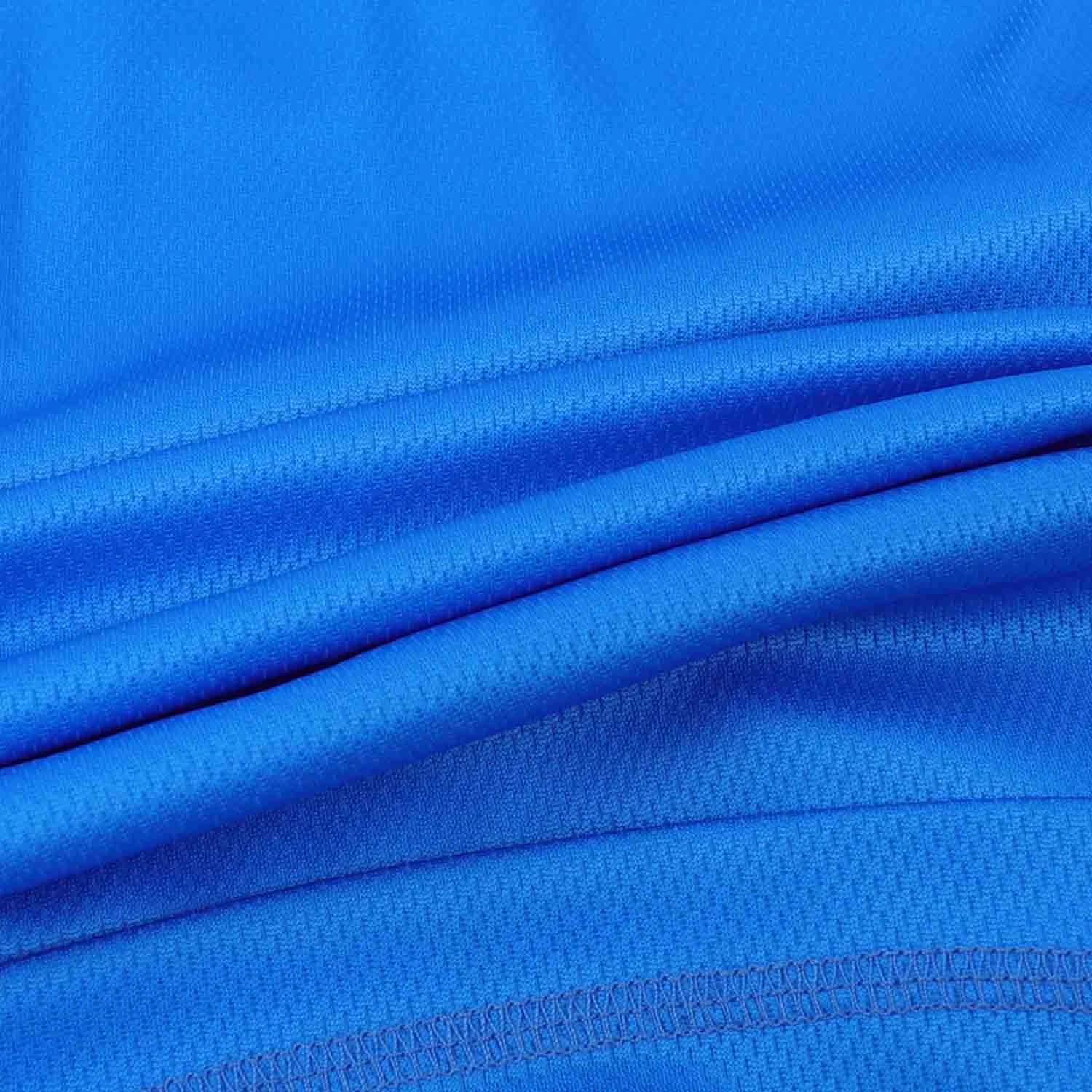
Blue jersey fabric with stitched seams

Cricket fabric and construction

Light on the body, free through the bowling action

The lightest fabric is not automatically the right cricket fabric. A white club shirt needs coverage; a colored T20 shirt needs a suitable surface for the design; both need a comfortable feel across hours of play. Select the body fabric and any mesh panels together, then assess a sample while raising the bowling arm, taking a batting stance and reaching for a catch. Fabric image shown as a temporary reference.

  • Shoulder and armhole room for bowling and throwing
  • Body length that stays comfortable in a batting stance
  • Coverage checks for white and light-colored fabrics
  • Sleeves and cuffs that work alongside batting gloves

From brief to team kit

How to order custom cricket jerseys

Build the order around your playing squad, competition format and first fixture, with time for artwork and sample approval.

1. Choose your match kit

Tell us whether you need colored limited-overs jerseys or cricket whites, your sleeve and collar preferences, squad quantity and first-match date.

2. Map the team artwork

Supply your club crest, sponsor files and color references. Position chest and sleeve logos, then set the back layout for player names and numbers.

3. Check fit and the player list

Approve garment measurements and any agreed sample. Check bowling reach, batting stance and sleeve length, then sign off each player's name, number and size.

4. Prepare for the first fixture

Confirm price, minimum quantity and the production and shipping schedule before proceeding. Include reserve players and spare match shirts in the final breakdown.

Cricket jersey buying guide

Choose the right shirt for your format of cricket

Match-day color rules, long spells in the field and repeated overhead movement all influence how a cricket jersey should be designed.

Colored T20 jerseys and traditional cricket whites

For T20 and other colored-kit formats, sublimation gives the club room to use strong color blocks, tonal patterns, gradients and fades. Design the front and back together so the shirt reads as one team identity, with enough contrast to keep player names and numbers legible.

For competitions played in whites, start with the required white or cream shade and the permitted crest, sponsor and trim details. Assess fabric coverage in the actual sample rather than selecting a white jersey by weight alone. Your club or competition should confirm its kit requirements before the design is approved.

  • Keep the club crest distinct from the main chest sponsor.
  • Place sleeve logos clear of seams and cuffs.
  • Scale back names and numbers for junior as well as adult shirts.

A fit check for batting, bowling and wicketkeeping

Check the jersey in cricket positions, not only standing upright. Raise the bowling arm fully, rotate through a batting stroke and reach overhead for a catch. The chest, armhole and upper sleeve should allow those movements without pulling uncomfortably across the shoulders.

For wicketkeepers, check the shirt in a crouch and while extending both arms. For batters, assess body length with the shirt worn as it will be on match day, and check long-sleeve cuffs alongside gloves. Use garment measurements for junior and adult players rather than relying on age or a familiar size label.
Select body fabric, mesh and stretch deliberately

A smooth polyester knit provides a surface for detailed sublimated artwork. Mesh offers a more open structure for ventilation panels. A stretch blend may suit a closer fit, but the garment still needs enough room for cricket movement. Choose each material for its job in the shirt instead of assuming every panel should use the same fabric.

Request swatches or an agreed sample to compare feel, coverage and stretch. Confirm composition, fabric weight and any moisture-wicking finish in the order specification. Only name a branded fabric technology when that exact material has been selected and confirmed for your jerseys.

Build a squad order that is ready for the season

Prepare one roster with each player's name, number, size and sleeve choice. Include reserve players, spare match shirts and any separate requirements for coaching staff. Keep sponsor artwork consistent across the squad while scaling the layout to suit different garment sizes.

Share the destination and first-fixture date when requesting a quote. Confirm minimum quantity, sample cost, production timing and shipping before ordering, and allow time for the club and sponsors to approve the artwork.

Care for jerseys between fixtures

Air match shirts after use rather than leaving them damp inside a kit bag. Follow the supplied care label for washing, drying and stain treatment, particularly on white jerseys. Share the care instructions with the squad so the match kit is maintained consistently throughout the season.

Cricket jersey FAQs

Cricket jersey fabric, design and fit questions

Answers for clubs choosing between colored match shirts, traditional whites and junior teamwear.

Can you create colored T20 jerseys and traditional cricket whites?

Both styles can form the basis of your custom order. Colored jerseys offer space for sublimated patterns, gradients, sponsor marks and player details. White or cream shirts need the base shade, fabric coverage and permitted logo or trim colors agreed for your competition.

How does sublimation work for cricket team designs?

Sublimation dyes the design into a suitable polyester fabric, so gradients, crests, names and numbers do not form a raised print layer. Supply club color references and vector logo files where possible, then approve a front-and-back layout and any agreed color sample.

Which fabric options suit long innings and warm-weather cricket?

Consider a lightweight performance polyester for the body, a moisture-wicking finish where specified, and mesh in selected ventilation panels. Balance weight and airflow with coverage, especially for whites. The exact knit, composition and finish should be selected from available samples for your order.

How should a cricket jersey fit through the shoulders and sleeves?

Players should be able to raise their bowling arm, rotate through a batting stroke and reach for a catch without uncomfortable pulling. Check chest width, armhole room, body length and sleeve measurements. For long sleeves, assess the cuff beside batting gloves; for wicketkeepers, check the fit in a crouch.

Can we combine mesh panels, contrasting sleeves and a polo collar?

Include those choices in your specification. Cut-and-sew construction lets the body, sleeves and side panels be planned separately. Confirm compatible fabrics and panel placement, and keep important sponsor artwork and player numbers clear of seams.

Can junior jerseys match our senior cricket team?

Use the same team colors, design and sponsor layout, with artwork scaled to junior garments. Choose sizes from an agreed youth garment chart and check body length and bowling reach rather than ordering by age alone.

What is the minimum order quantity and price?

Request a quotation with your quantity, design, fabric preferences, size breakdown and destination. Minimum quantities and pricing are confirmed for the specific cricket jersey order.

How long will production and delivery take?

Timing depends on the agreed specification, quantity, artwork and sample approvals, and shipping destination. Share your required arrival date so production and delivery timing can be confirmed in the quotation.

What should we check on a cricket jersey sample?

Check the fabric feel and coverage, collar shape, sleeve length, shoulder movement and body length. Review club colors, crest detail, sponsor positions and back-number legibility. Confirm sample availability, cost and timing before the bulk order, particularly when selecting white fabric or a new fit.

Kit out your cricket club

Create your team's next match jersey

Tell us your match format, team colors or white-kit requirements, squad quantity and first-fixture date. Add your crest, sponsor artwork and sleeve preferences for a cricket jersey quote built around your club.

Uniform inquiry

WhatsAppChat on WhatsApp