Choosing the right fabric is one of the most important decisions in sportswear manufacturing. The fabric affects how the garment feels, performs, fits, stretches, breathes, and lasts over time.
For sportswear brands, teams, gyms, clubs, and private labels, fabric selection can make the difference between a product that feels professional and one that fails after a few wears.
Sportswear needs to support movement, handle sweat, maintain shape, and stay comfortable during activity. That is why manufacturers use different materials depending on the product, sport, climate, and customer requirements.
At Byon Textile, we manufacture custom sportswear, teamwear, casual wear, workwear, bags, and textile accessories from our facility in Sialkot, Pakistan. In this guide, we explain the most common sportswear fabrics, including polyester, mesh, cotton, fleece, and blends.
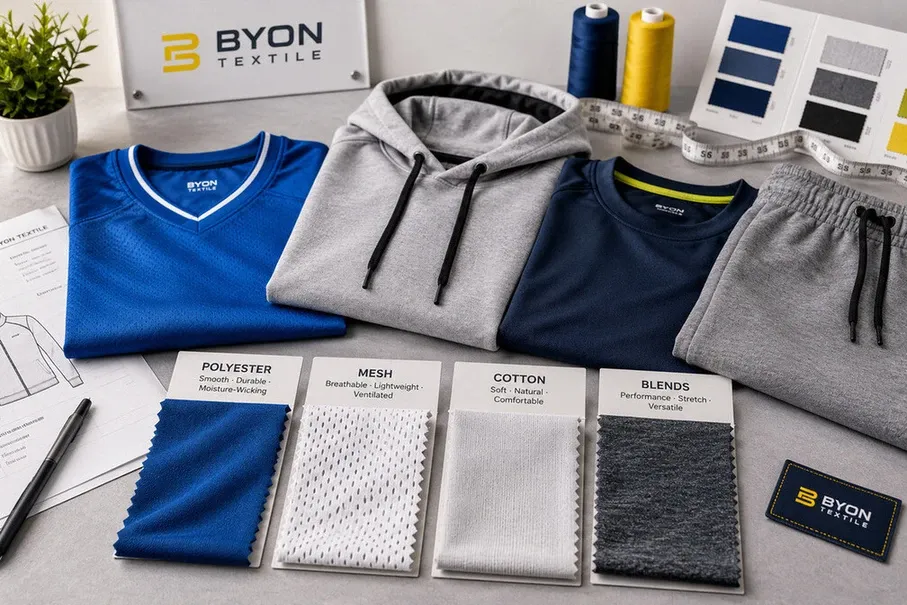
Why Fabric Choice Matters in Sportswear
Sportswear is different from ordinary clothing. It is designed for movement, performance, comfort, and durability.
A sportswear fabric should usually offer:
- Breathability
- Moisture control
- Durability
- Flexibility
- Shape retention
- Comfort
- Easy care
- Print compatibility
- Long-term performance
The right fabric depends on the product. A football jersey needs lightweight breathability. A tracksuit needs comfort and structure. A gym hoodie needs softness and durability. A training shirt needs sweat management and movement support.
This is why buyers should not choose fabric only based on price. The right fabric should match the product’s purpose.
Polyester: The Most Popular Sportswear Fabric
Polyester is one of the most widely used fabrics in sportswear manufacturing.
It is lightweight, durable, quick-drying, and suitable for activewear. Polyester is commonly used in football jerseys, training shirts, tracksuits, shorts, gym wear, sublimated jerseys, and performance apparel.
Why Polyester Is Used in Sportswear
Polyester is popular because it performs well during physical activity. It does not absorb moisture like cotton, which means it dries faster and feels lighter during training or sports.
Benefits of polyester include:
- Lightweight feel
- Quick-drying performance
- Good durability
- Shape retention
- Suitable for sublimation printing
- Lower shrinkage compared to cotton
- Easy washing and care
- Good color retention
For teamwear and custom jerseys, polyester is especially useful because it works well with sublimation printing. This allows brands to create full-color designs, patterns, logos, names, and numbers.
Best Uses for Polyester
Polyester is commonly used for:
- Football jerseys
- Cricket shirts
- Basketball jerseys
- Training shirts
- Tracksuits
- Running tops
- Gym wear
- Sports shorts
- Sublimated team uniforms
For brands developing performance sportswear, polyester is usually one of the first fabric options to consider.
Mesh Fabric: Breathable and Lightweight
Mesh fabric is known for its open structure and breathability. It allows air to pass through the garment, helping the wearer stay cooler during activity.
Mesh is often made from polyester and is commonly used in sports jerseys, training wear, lining, ventilation panels, and performance apparel.
Why Mesh Works Well for Sportswear
Mesh is ideal for sportswear because it improves airflow. This makes it useful for athletes, gym users, and teams playing in warm conditions.
Benefits of mesh fabric include:
- High breathability
- Lightweight structure
- Better ventilation
- Sporty appearance
- Good moisture movement
- Comfortable for active use
Mesh can be used as the main fabric or as a panel in specific areas such as underarms, sides, shoulders, or back sections.
Best Uses for Mesh
Mesh is commonly used for:
- Football jerseys
- Basketball jerseys
- Training tops
- Sports bibs
- Activewear panels
- Jacket linings
- Gym apparel
- Performance shirts
For brands looking to create lightweight and breathable sportswear, mesh is a strong option.
Cotton: Comfortable but Less Performance-Focused
Cotton is soft, breathable, and comfortable. It is widely used in casual wear, t-shirts, hoodies, sweatshirts, joggers, and lifestyle sportswear.
However, cotton is not always the best choice for high-performance sportswear because it absorbs moisture and dries slowly.
When Cotton Works Best
Cotton is ideal when comfort is the main priority.
Benefits of cotton include:
- Soft hand feel
- Natural breathability
- Comfortable for daily wear
- Good for casual sportswear
- Suitable for t-shirts and hoodies
- Premium feel when using high-quality cotton
Cotton is great for lifestyle sportswear, gym merchandise, club apparel, casual teamwear, and streetwear-inspired sports collections.
Limitations of Cotton in Sportswear
Cotton absorbs sweat, which can make it feel heavier during intense activity. It can also take longer to dry compared to polyester.
That is why cotton is better for:
- Casual sportswear
- Gym hoodies
- Lifestyle t-shirts
- Warm-up apparel
- Sports merchandise
- Team casual wear
For active performance garments, brands often choose polyester or blended fabrics instead.
Cotton-Polyester Blends: Balanced Comfort and Performance
Blended fabrics combine the qualities of two or more fibers. One of the most common blends in sportswear and casualwear is cotton-polyester.
This blend offers a balance between cotton’s softness and polyester’s durability.
Why Blends Are Popular
Blended fabrics are useful because they can be developed for specific performance and comfort needs.
Benefits of cotton-polyester blends include:
- Softer feel than pure polyester
- Better durability than pure cotton
- Improved shape retention
- Reduced shrinkage
- Better drying compared to 100% cotton
- Suitable for casual sportswear
- Good for printing and embroidery
This makes blends a good choice for brands that want garments suitable for both active and casual use.
Best Uses for Cotton-Polyester Blends
Cotton-polyester blends are commonly used for:
- Hoodies
- Sweatshirts
- Joggers
- Tracksuits
- Polo shirts
- Casual sportswear
- Team travel wear
- Gym merchandise
For private label sportswear brands, blends are often a practical choice because they offer comfort, durability, and value.
Fleece: Warm, Soft, and Ideal for Hoodies
Fleece is commonly used in hoodies, sweatshirts, joggers, and warm-up apparel. It is soft, warm, and comfortable, making it popular for sports teams, gyms, schools, clubs, and lifestyle sportswear brands.
Fleece can be made from cotton, polyester, or blended fibers.
Why Fleece Is Used in Sportswear
Fleece provides warmth and comfort without feeling too heavy. It is especially useful for cooler weather, training sessions, travel wear, and casual athletic collections.
Benefits of fleece include:
- Soft inner feel
- Warmth and comfort
- Good for layering
- Durable construction
- Suitable for embroidery
- Premium casual look
Fleece is ideal for sportswear products that are worn before or after activity rather than during intense performance.
Best Uses for Fleece
Fleece is commonly used for:
- Hoodies
- Sweatshirts
- Joggers
- Tracksuits
- Warm-up apparel
- Team travel sets
- Gym merchandise
At Byon Textile, fleece-based products are commonly used for custom hoodies, sweatshirts, joggers, and private label sportswear collections.
French Terry: A Premium Casual Sportswear Fabric
French terry is another popular fabric for sportswear-inspired casualwear. It has a smooth outer surface and looped inner texture.
It is lighter than heavy fleece but still comfortable and durable.
Why French Terry Is Popular
French terry works well for premium hoodies, sweatshirts, joggers, shorts, and lifestyle sportswear.
Benefits include:
- Comfortable feel
- Good breathability
- Premium texture
- Suitable for year-round wear
- Good structure
- Works well for casual athletic apparel
For brands that want a more premium look than basic fleece, French terry is a strong option.
Spandex and Elastane: Stretch and Flexibility
Many sportswear garments require stretch. This is where spandex or elastane becomes important.
These fibers are usually blended with polyester, nylon, or cotton to improve flexibility and recovery.
Why Stretch Matters
Sportswear needs to move with the body. Stretch fabrics improve comfort and performance during exercise.
Benefits of stretch fabrics include:
- Better movement
- Improved comfort
- Shape recovery
- Flexible fit
- Better performance feel
Stretch materials are commonly used in compression wear, leggings, gym wear, training tops, fitted sportswear, and performance apparel.
Choosing the Right Fabric for Each Sportswear Product
Different sportswear products need different fabrics.
Football Jerseys
Best fabrics:
- Polyester
- Polyester mesh
- Interlock
- Performance blends
Football jerseys should be lightweight, breathable, and suitable for sublimation or printing.
Tracksuits
Best fabrics:
- Polyester
- Cotton-poly blends
- Fleece
- French terry
Tracksuits should offer comfort, durability, and a clean fit.
Gym Wear
Best fabrics:
- Polyester blends
- Cotton-poly blends
- Stretch fabrics
- Lightweight jersey
Gym wear should support movement and handle sweat effectively.
Hoodies and Sweatshirts
Best fabrics:
- Fleece
- French terry
- Cotton-poly blends
These garments should feel comfortable, warm, and durable.
Team Uniforms
Best fabrics:
- Polyester
- Mesh
- Interlock
- Performance blends
Team uniforms need consistent color, branding, size accuracy, and durability.
Sports Bags and Accessories
Best fabrics:
- Polyester
- Canvas
- Denim
- Coated fabrics
- Heavy-duty blends
Sports bags need strong construction, durability, and reliable stitching.
Fabric and Printing Compatibility
Fabric choice also affects printing and branding.
For example, sublimation printing works best on polyester. Screen printing can work on many fabrics, but results depend on fabric texture and composition. Embroidery works well on structured fabrics, fleece, polos, hoodies, jackets, and bags.
Common branding methods include:
- Sublimation printing
- Screen printing
- Heat transfer
- Embroidery
- Woven labels
- Printed labels
- Patches
- Custom trims
At Byon Textile, we offer in-house printing and embroidery, helping brands maintain better quality control and faster production. You can explore our sportswear manufacturing capabilities.
Sustainability in Sportswear Fabric Selection
Sustainability is becoming more important in sportswear manufacturing.
Brands are increasingly looking for fabrics and production methods that reduce waste and improve durability.
Sustainable fabric planning may include:
- Using durable fabrics that last longer
- Reducing fabric waste during cutting
- Choosing better-quality materials
- Using recycled polyester where suitable
- Improving production planning
- Reducing rejected pieces through quality control
- Avoiding unnecessary packaging waste
Sustainability is not only about using eco-friendly materials. It is also about making better garments that last longer and create less waste.
Learn more about Byon Textile’s responsible production approach on our sustainability page.
How Byon Textile Helps Brands Choose the Right Fabric
Byon Textile is located in Sialkot, Pakistan, a globally recognized hub for sportswear and sports goods manufacturing.
We help brands develop custom sportswear, teamwear, casual wear, workwear, bags, and accessories through complete cut-to-pack production.
Our process includes:
- Fabric sourcing
- Sampling
- Cutting
- Printing
- Embroidery
- Stitching
- Quality control
- Finishing
- Packing
Choosing the right fabric is part of this process. We work with brands to match the fabric to the product’s purpose, target market, budget, and branding requirements.
To understand the full production workflow, visit our manufacturing process page.
Final Thoughts
Sportswear fabric selection is one of the most important steps in creating high-quality products.
Polyester is ideal for performance jerseys and teamwear. Mesh is useful for ventilation and breathability. Cotton works well for casual sportswear. Blends provide a balance of comfort and durability. Fleece and French terry are excellent for hoodies, sweatshirts, joggers, and lifestyle sportswear.
The best fabric depends on the product, sport, climate, branding method, and customer expectations.
For brands looking to manufacture custom sportswear, choosing the right fabric is the foundation of quality production.
By working with a reliable manufacturer like Byon Textile, brands can develop sportswear that is comfortable, durable, customizable, and ready for market.